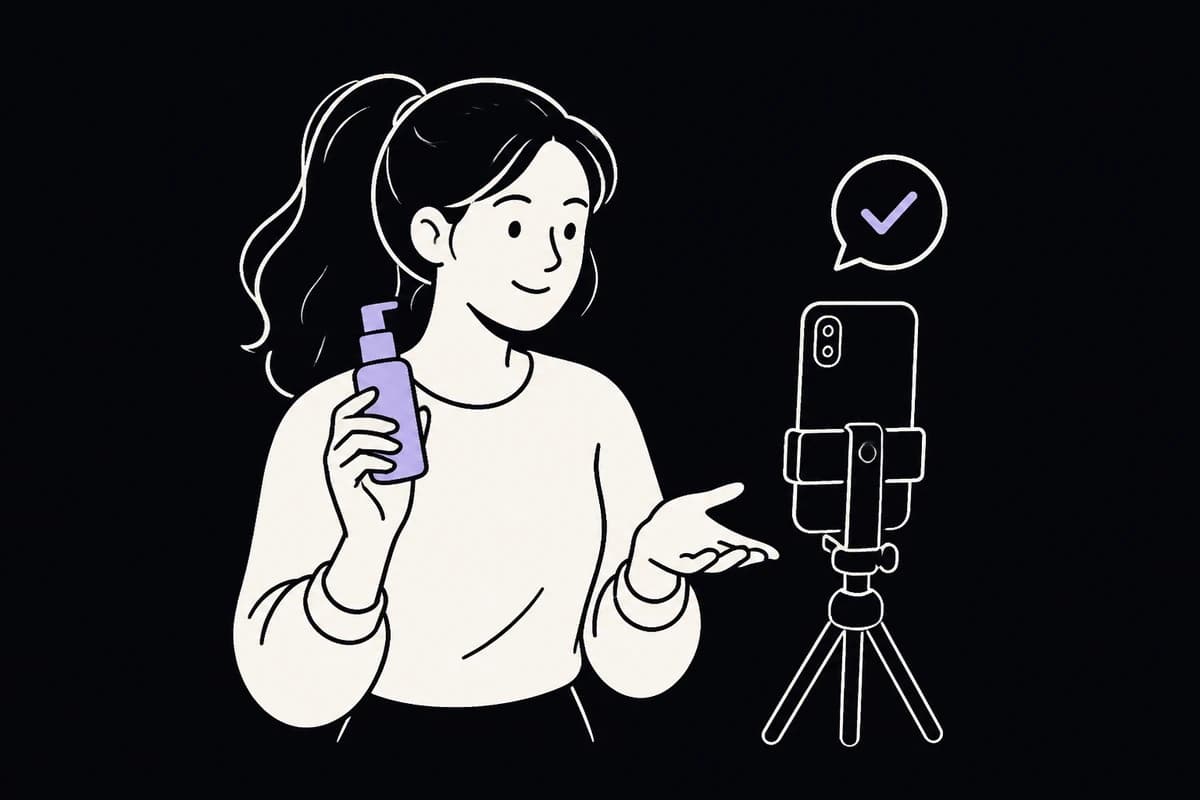
Show an experience, not a script.
Choose someone who has actually used your product.
A testimonial is an account of that person’s experience. Their voice, setting, and product details help a viewer understand what happened; a polished slogan alone does not. Ask what they needed, what changed, and what they would tell a friend. Let them use their own words.
Choose the format for the question.
A review, customer video, and creator ad can all be useful, but they show different things.
| Format | What it shows | Good fit |
|---|---|---|
| Written review | A customer’s words and optional rating. | Quick feedback beside product details. |
| Video testimonial | A customer speaking about their own use, often with the product in view. | Showing context, tone, and a concrete product moment. |
| Creator-made UGC | A creator’s produced video; they may or may not be a customer. | A brief, concept-led ad when a creator is the right messenger. |
A creator can also be a genuine customer. What matters is describing the relationship accurately.
A good story has three parts.
Use these as prompts, not lines to memorize.
Illustrative reusable-bottle example, not a real customer endorsement.
01
Before
What were they trying to solve?
“I needed a bottle I would remember to take to work.”
02
Experience
What changed when they used it?
“I fill it before I leave each morning.”
03
Detail
What can they show or describe?
“It fits in the side pocket of my bag.”
The three answers can become one short clip. Keep the customer’s order if it tells the story better; the structure is a prompt, not a script.
Look for useful proof in the recording.
Specific detail helps a viewer judge the story for themselves.
- Context: What was the customer trying to do before they bought?
- Demonstration: Can they show the product or point to a real feature they used?
- Limits: Is the claim about their own experience, without suggesting that everyone gets the same result?
Choose where the clip will run.
A product-page testimonial and a paid ad need clear, separate permission.
- On a product page
- Keep enough context to answer a buyer’s question. A longer customer explanation may be useful beside the product details.
- In a paid ad
- Choose one clear point. Agree on the license term, channels, compensation, and disclosure before running it.
Check the edit and approval.
Keep the customer’s meaning intact and record what they agreed to.
Show the customer the requested use in plain language. A website testimonial is not automatically cleared for paid ads. If you compensate the customer, make any required connection clear in the ad. The FTC’s endorsement guidance explains the US rules. Trueclip stores separate use choices, a receipt you upload, and license dates with a selected clip.